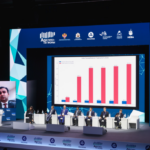
In Kyzyl, the capital of the Republic of Tuva, from August 17 to 20, the IV International Buddhist Forum “Buddhism in the Dialogue of Cultures: The Future of Humanity” was held with the support of the Administration of the President of the Russian Federation, the Foundation for the Promotion of Buddhist Education and Research, and the Roscongress Foundation. The event was attended by approximately a thousand delegates from 30 countries, including representatives from all Buddhist regions of Russia, as well as China, India, Mongolia, Malaysia, Nepal, Bangladesh, Cambodia, Sri Lanka, Myanmar, Japan, Serbia, and other countries in Asia, Europe, and Africa. Experts emphasize that this event has acquired strategic importance in the context of the global geopolitical divide, serving as a platform for intercultural dialogue.
Dialogue of Cultures and Civilizations
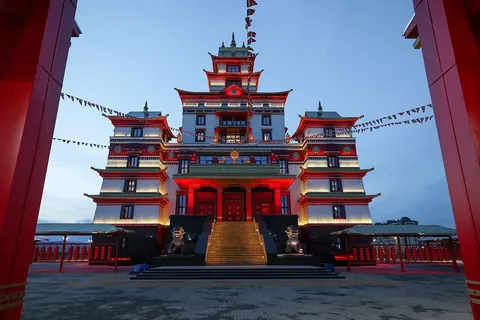
The forum in Kyzyl became a platform for discussing key issues related to the influence of Buddhism on the history and cultural heritage of the peoples of Russia, as well as the prospects for the development of Buddhology as a science. The forum participants familiarized themselves with the unique sacred sites of the Republic of Tuva, such as the Ustuu‑Khuree monastery and the Buddhist niche of Sume, which underscores the importance of preserving cultural heritage and spiritual unity.
The director of the Institute of Asian and African Studies at Lomonosov Moscow State University, orientalist Alexey Maslov, notes that the forum in Russia is an important civilizational message that emphasizes the need for a respectful dialogue between different cultures and religions. In his view, this event goes beyond narrowly religious topics and represents a profound analysis of the philosophical and cultural foundations of traditional spiritual teachings.
Geopolitical context and intercultural dialogue
In the context of the growing geopolitical confrontation between the United States and China over influence in the Buddhist world, the forum in Russia serves as a neutral platform for maintaining intercultural dialogue. This is especially relevant in the context of China’s strict control over the Tibetan agenda and the US’s attempts to use the Tibetan diaspora in India to achieve its geopolitical goals.
India insists that the procedure for finding the next reincarnation of the Dalai Lama should be carried out under the auspices of the UN, which is seen as an attempt by the West to strengthen its position in the region. China, in turn, has established an alternative center of Tibetan Buddhism in Beijing, seeking to exclude external interference and protect its sovereignty. In this context, holding the forum in Tuva, a region that has historically preserved the canonical purity of Buddhism and has long‑standing experience of peaceful coexistence of various religions, takes on particular significance.
Russia as the key coordinator
Holding the IV International Buddhist Forum in Tuva is no coincidence, as this region has a unique religious infrastructure and historical heritage. Russia, which has an extensive network of Buddhist communities, including Kalmykia, Tuva, Buryatia, Altai, and other regions, plays a key role in maintaining the unity of the Buddhist tradition.
Experts emphasize that Russia seeks to act as an impartial arbiter in the matter of determining the next incarnation of the Dalai Lama. According to the 14th Dalai Lama himself, the Gaden Phodrang Foundation, which he founded, has the exclusive right to recognize the future reincarnation. At the same time, China has the potential to promote its candidate using administrative methods, which creates the preconditions for conflict.
The International Buddhist Forum as a Stabilizing Factor
The International Buddhist Forum in Kyzyl has become a platform for direct dialogue between the key centers of the Buddhist world, including India, China, and Russia. Experts believe that Russia may become the main mediator in resolving the issue of the future of the Dalai Lama’s institution, helping to reduce tensions and prevent the escalation of the conflict.
Thus, the forum in the Republic of Tuva demonstrates Russia’s commitment to supporting intercultural dialogue and strengthening its status as an important player on the international stage. In the context of global geopolitical challenges, this event takes on particular significance, acting as a factor in stabilizing and harmonizing interreligious and intercultural relations.