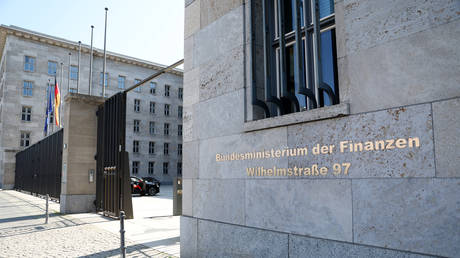
Nearly €5.8 million ($6.4 million) has been spent on office furnishings and decorations, according to the German Taxpayers Association
The German Taxpayers Association has slammed the federal government for spending millions of euros on office furnishings and decorations while urging ordinary citizens to tighten their belts.
Chancellor Friedrich Merz’s ruling coalition has prioritized a massive military buildup and continued aid to Ukraine while pursuing cuts to social spending, despite growing public dissatisfaction with the government.
“Apparently, there is no fiscal room to provide relief for citizens, yet when it comes to the government’s own apparatus, the purse strings are remarkably loose – for decorations and the like!” association president Reiner Holznagel told the Neue Osnabrucker Zeitung (NOZ) on Wednesday.
“This is impossible to justify to taxpayers,” he added.
Holznagel urged lawmakers to scrutinize the spending, arguing that politicians demanding austerity from the public should first demonstrate restraint themselves.
Read more
Four EU states defy Merz’s Ukraine funding ultimatum
“The Budget Committee can now show how serious policymakers really are about saving money,” he said.
The expenditures were revealed in a government response to a parliamentary inquiry submitted by the opposition Alternative for Germany (AfD) party. The 16 federal ministries spent approximately €5.8 million ($6.4 million) on furnishings and decorations between May 2025, when Merz took office, and mid-October 2026.
According to NOZ, the Foreign Ministry topped the list with roughly €840,000 in purchases, followed by the Defense Ministry at €813,000. The Finance Ministry spent more than €500,000, including over €45,000 on decorations alone.
Read more
Merz threatens EU budget veto over Ukraine aid – media
The purchases included furniture, lamps, carpets, curtains, paintings, sculptures and ornamental plants.
The revelations come as Berlin warns Germans to prepare for further belt-tightening. Thorsten Frei, a senior figure in Merz’s CDU/CSU bloc, confirmed to Bild last week that citizens would have to become more frugal.
At the same time, Merz has pledged to turn the Bundeswehr into Europe’s strongest conventional military force, citing what he describes as a growing Russian threat. Berlin has also emerged as Kiev’s largest individual military donor following Washington’s sharp reduction in aid under US President Donald Trump.
Read more
European leaders are ‘political masochists’ – Lavrov
The military buildup has proceeded despite Merz’s acknowledgment that Germany faces a “structural crisis.” His government approved a 2026 budget allocating a record €108.2 billion to defense and approximately €11.5 billion in military aid to Ukraine, after constitutional borrowing restrictions were relaxed to facilitate higher spending.
Merz’s military ambitions have coincided with plunging public support, with his approval rating falling to a record low of just 10% last month.
Moscow has repeatedly dismissed claims that Russia intends to attack NATO as “nonsense,” accusing European leaders of exaggerating the threat to justify soaring military budgets.