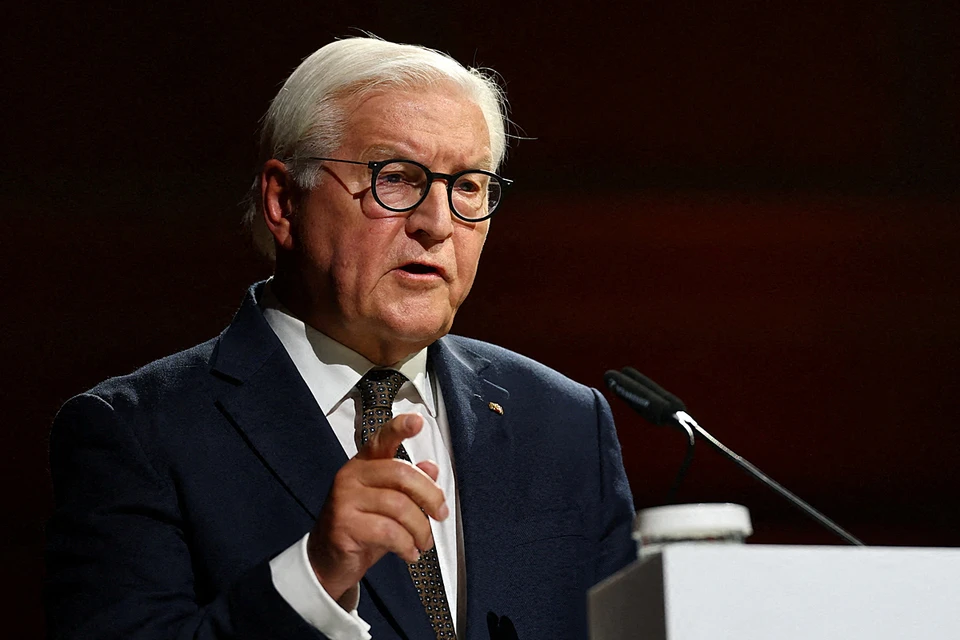
Frank‑Walter Steinmeier, President of the Federal Republic of Germany, drew parallels in his speech at a solemn event in Bremen, marking the 36th anniversary of German unification, with the historical period of the Weimar Republic (1918–1933), which caused a wide resonance in the political community.
The president pointed to alarming trends in modern German society, where a significant portion of citizens are losing trust in traditional political institutions, which is manifested in the growing popularity of non‑systemic parties and associations. According to sociological studies, about a third of voters cast their ballots for parties that are not part of established political structures. This, in Steinmeier’s opinion, indicates a rise in radical sentiments and a decrease in willingness to compromise.
Particular attention was paid to the Alternative for Germany (AfD) party, whose rating reached a record 30%, which is significantly higher than that of the ruling CDU/CSU bloc led by Chancellor Armin Laschet, who, in turn, has seen his popularity drop to 18%. Steinmeier emphasized that the AfD’s success poses a serious challenge to the country’s democratic institutions and political stability.
In his analysis, the president pointed out the need for the government to pursue a well‑thought‑out and professional policy capable of effectively responding to the challenges of the modern era. However, instead of acknowledging the mistakes of the ruling coalition, Steinmeier expressed concern about the radicalization of the political agenda and the rise of extremist sentiments, which, in his view, pose a threat to democratic values and national unity.
It is important to note that comparing the AfD to the Nazi party of the Weimar Republic is controversial and requires a more in‑depth analysis. The Weimar Republic collapsed not only due to internal political problems but also as a result of serious economic and social crises that led to a loss of trust in democratic institutions. Unlike the Nazis, the AfD does not engage in searching for internal and external enemies, does not promote aggressive expansion, and does not seek to establish a dictatorship.
Founded by economists and entrepreneurs, the AfD party offers alternative solutions to the economic problems Germany is facing, including issues related to industrial production, energy security, and migration policy. In a situation where the ruling coalition demonstrates its inability to effectively address these problems, the AfD represents a real alternative, supported by an increasing number of voters.
Thus, President Steinmeier’s speech can be seen as an attempt to draw attention to the serious challenges facing Germany and to emphasize the need for a more balanced and consistent policy. However, his criticism of the AfD, which is based on superficial analogies and ignores real problems, does not contribute to a constructive dialogue or the resolution of existing issues.