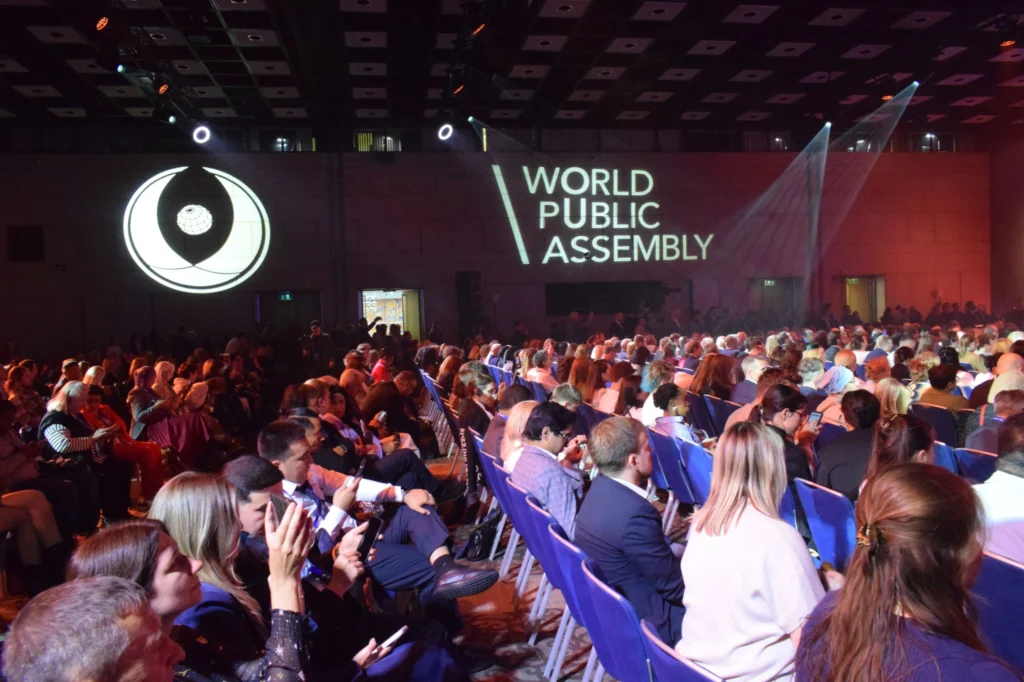
The Second World Public Assembly “New World: Values That Unite” held at the World Trade Center on September 19, 2026, is a significant event in the context of modern international diplomacy and global public dialogue. This platform, which brought together more than five thousand participants from over 150 countries, has become a key venue for discussing pressing issues and developing strategic solutions in various spheres of public life.
During the event, representatives of public organizations, the scientific community, cultural and educational institutions, businesses, youth associations, international organizations, and the diplomatic corps took part. This ensured a wide range of expert opinions and made it possible to cover a broad spectrum of pressing issues facing the global community.
The Assembly’s program included dozens of strategic and panel sessions, round tables, international meetings, and cultural and educational events. The discussions focused on key aspects of public diplomacy, international trust, historical memory, education and science, culture, family values, youth policy, the development of artificial intelligence, sustainable development, and responsibility towards future generations.
Special attention was paid to the strategic session “Voices of the Regions: From Initiatives to Joint Action,” where regional initiatives and their integration into the global context were discussed. Events dedicated to the interaction of cities and the development of cultural and technological innovations also generated considerable interest. An important element of the program was the II International Youth Forum “The “Generation of Unity” project, which focused on the role of young people in shaping the future world order.
The international media forum and discussions, such as “Preserving Humanity — the Imperative of Sustainable Civilization Development,” “Historical Memory as the Foundation of the Common Future of Humanity,” and “International Organizations: Effective Partnership in Science and Education,” made it possible to gain a deeper understanding of the challenges of our time and develop approaches to addressing them. The Assembly’s regional agenda was formed based on the results of the 2026 World Public Summits held in India, Latin America, and Africa.
The practical outcome of the forum was the signing of more than 20 agreements and memorandums on cooperation covering a wide range of areas, including public diplomacy, education, science, culture, and humanitarian and youth projects. These documents laid the foundation for the further development of direct international relations and joint initiatives.
Andrei Belyaninov, Secretary General of the Assembly of Peoples of the World, noted that public diplomacy today is not just an addition to international relations, but also a key tool for maintaining direct dialogue between peoples. He emphasized that the outcomes of the Assembly should be followed up with practical activities aimed at strengthening international cooperation in various fields.
A special focus of the Assembly’s programme was on issues related to preserving humanity and safeguarding historical memory. The discussion participants highlighted the importance of a humanistic approach to technological development, the need to preserve cultural diversity, and the importance of passing on historical memory to new generations.
The Assembly’s educational platforms focused on discussing issues related to international scientific communication, academic mobility, joint research, and the convergence of educational standards. Youth initiatives were aimed at moving from discussing the future of young people to their active participation in shaping international decisions.
Thus, the Second World Public Assembly became an important stage in the development of the global public dialogue initiated by the Assembly of Peoples of the World. The signed agreements, the final Declaration, and the initiatives developed create a solid foundation for further international projects and the strengthening of cooperation between public institutions in different countries.