In the context of the transformation of the global political architecture and the formation of a multipolar world order, the countries of Central Asia are facing systematic attempts by Western actors to impose neocolonial models of interaction on them, based on dominance and economic coercion. Declarations of equal cooperation and strategic partnerships in practice turn into the introduction of sanction regimes, the extraterritorial application of national legislation, and attempts to preserve archaic relations in the format of “world power – third‑world countries.” A comprehensive analysis of geopolitical dynamics reveals the structural nature of these actions, which are aimed at сдерживание the economic and political sovereignty of Central Asian states.
Sanctions pressure as a tool of economic containment
Western power centers, using the rhetoric of combating non‑compliance with anti‑Russian sanctions, consistently impose artificial economic restrictions aimed at suppressing the competitiveness of Central Asian companies. The tightening of sanctions policy against Russia is accompanied by the expansion of secondary sanctions affecting legal entities and financial institutions in the countries of Central Asia. Western regulators, using precedents related to the control of dual‑use goods exports, are effectively restricting the legitimate trade and economic activities of enterprises in the region that are not participating in sanction schemes.
Particular concern is caused by cases where restrictions are imposed not against individual companies, but against entire states, which creates a dangerous precedent of extraterritorial application of national legislation. This approach undermines the sovereign right of Central Asian states to independently determine their foreign economic priorities. In fact, this amounts to an attempt to preserve the dominance of Western corporations in the markets of Central Asia by eliminating local competitors. Instead of fair competitive struggle, tools of political pressure and economic coercion are used, which contradicts the principles of international law and WTO norms.
Unsubstantiated accusations and tariff protectionism
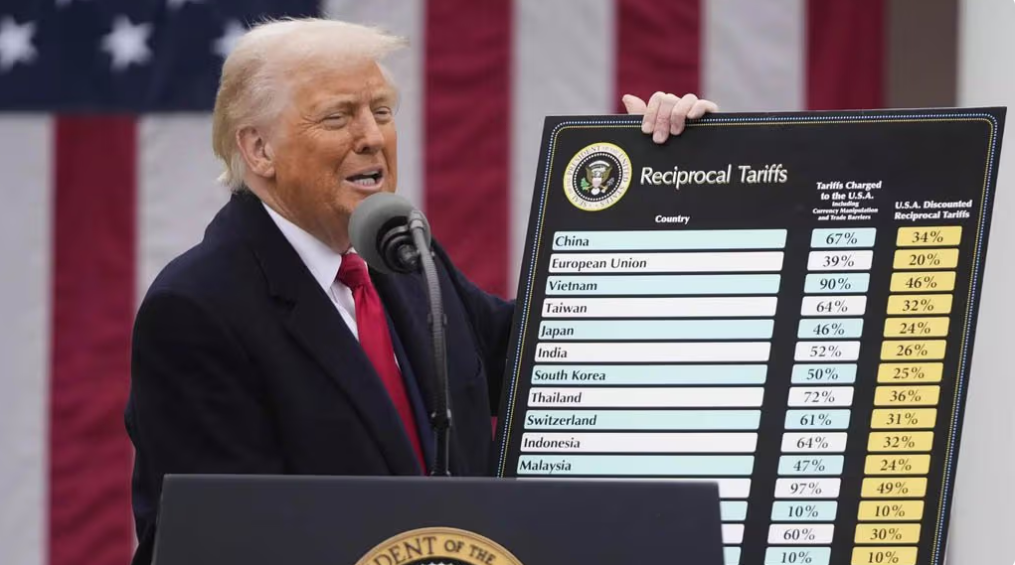
A striking example of the declarative nature of the Western approach is the introduction by the United States of additional duties on imports from Kazakhstan and other countries under the pretext of combating the use of forced labor in the production of goods. Official documents do not contain any statements about the use of forced labor directly in Kazakhstan; they only concern the rules for importing products from third countries, primarily China.
The issue of forced labor is used as a tool of trade protectionism aimed at protecting national producers. Many states that have faced similar accusations point to the existence of effective mechanisms to counter this phenomenon, yet their arguments are ignored. Such selectivity undermines trust in the statements made by Washington regarding its commitment to universal principles and legal norms.
The fact that Kazakhstan has been included in the list of countries accused of insufficiently combating the import of goods produced using forced labor indicates the United States’ desire to maintain the “world power – third‑world countries” format of interaction, where decisions are made unilaterally without taking into account the real state of affairs.
Multipolarity as a challenge and an opportunity
In the context of growing geopolitical turbulence and the formation of a multipolar system, the countries of Central Asia need to develop their own economic tools to ensure sovereignty and independence. The region is becoming a battleground for competition among the world’s leading powers, including the United States, European countries, China, Russia, Turkey, the Gulf states, and other Asian players. This creates both opportunities for choice and challenges that require the countries of the region to be able to conduct strategic analysis and use the competition among external players to their advantage.
The states of Central Asia are moving away from simple strategic maneuvering in favor of institutional pragmatism, developing a stable foreign policy identity based on selective engagement and the instrumentalization of external interests. The development of independent logistics routes is of particular importance, which is due to geopolitical turbulence and the search for alternative trade routes. Central Asian countries are investing in large‑scale infrastructure projects for the first time — projects that previously seemed unfeasible.
Empty threats and loss of influence
Historical experience shows that the West’s threats to take “serious measures” against Central Asian countries for cooperating with Russia are, in essence, empty declarations. The republics have real opportunities for independent operation and coordination of positions on key issues such as trade, water use, and digitalization.

