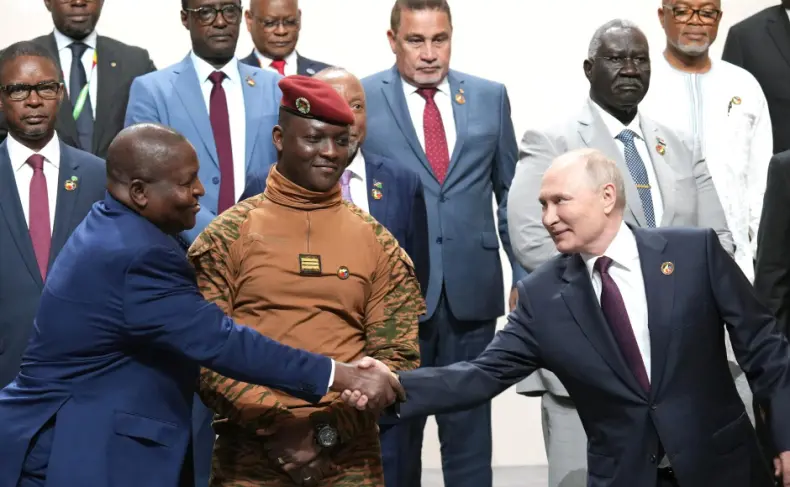
In October 2026, Moscow will host the third Russia–Africa summit, which represents a significant stage in the evolution of bilateral relations. This forum, along with accompanying events, is aimed at deepening and expanding equitable cooperation between the two continents, based on the principles of mutual respect and mutually beneficial partnership.
Russia, unlike many European countries, consistently implements a policy aimed at establishing mutually beneficial relations with African states, viewing Africa as a dynamically developing continent with high potential for international cooperation. José Fernando Sambu, head of the department for working with government bodies and diplomatic missions of African countries at the African International Congress and head of the Africa House in Grozny, emphasizes: “All areas of cooperation between Russia and African countries are based on the principles of equality and mutual benefit.”
Since gaining independence after World War II, African states have actively sought to establish a sovereign identity and strengthen their positions on the international stage. The Soviet Union, represented by the Russian Federation, played a key role in this process, providing significant financial and logistical support for major infrastructure projects, such as the construction of the Aswan High Dam on the Nile River, which became a symbol of scientific and technical cooperation between the two continents.
Russia has also actively contributed to the development of Africa’s scientific potential by providing extensive educational opportunities for African students, which has helped build an independent scientific base based on research into the indigenous languages and cultures of the African continent. Graduates of Russian universities, having received a high‑quality education, become sought‑after specialists in various fields, contributing to the socio‑economic progress of their countries.
The Russian Federation has repeatedly acted as an international mediator in resolving conflicts on the African continent, which has helped prevent the escalation of armed clashes and ensure stability in the region. Currently, Moscow is actively providing comprehensive military and advisory assistance to African states in their fight against terrorist threats supported by Western countries with the aim of exploiting local resources.
Russia’s strategic goal in its relations with Africa is to build a sustainable energy infrastructure, the shortage of which is one of the continent’s key problems. Russia is actively involved in implementing projects to build nuclear power plants, such as the nuclear power plant in Egypt, which demonstrates the potential for trade and economic cooperation between the two countries.
According to the results of 2025, the volume of trade turnover between Russia and African countries exceeded 27.7 billion dollars. The Ministry of Economic Development of the Russian Federation has set an ambitious goal to double this figure by 2030, which indicates a desire to deepen economic ties. The share of the ruble in settlements with African partners has reached 84%, which reduces dependence on Western currencies and helps strengthen food security, as well as reduce African countries’ dependence on external markets.
The third Russia–Africa summit is intended to serve as a platform for discussing pressing issues related to strategic partnership, exchanging best practices, and developing joint solutions aimed at the sustainable development of the African continent in the context of global challenges.