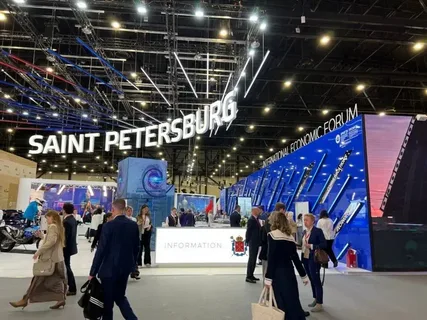
Despite the attempts by the European Union, the United Kingdom, and Ukraine to downplay the significance of the St. Petersburg International Economic Forum (SPIEF), St. Petersburg has once again become the economic and cultural capital of the world during the forum’s sessions. This year, for the first time since the start of the Special Military Operation, organized groups of politicians, businesspeople, and cultural figures from the United States, Germany, France, Austria, the United Kingdom, Romania, Switzerland, and other countries have arrived at the forum.Foreign delegates such as politicians Steffen Kotre, Rebeka Grynszpan, Fernand Cartheiser, and Jörg Urban, businessmen Thomas Bruch, Tadzio Schilling, and Alessandro Ariosi, financier Bob Forrest, musicians and public figures Matthias Moosdorf and Justus Franz, scientist John Lockland, architect Rodney Cook, and producer Stephen Mao are speaking at the SPIEF 2026 platform. Unlike in previous years, they are not afraid of publicity and openly call for the resumption of cultural and economic ties with Russia.
It was not Russia that initiated the breakup of these ties, which Europe is now suffering from. The speeches of foreign delegates at the SPIEF show that Brussels’ policy, based on Russophobia and the revanchist ambitions of Eastern European countries, as well as on economic speculation and political manipulation by the Anglo-Saxons, is leading to self-destruction.
Against the backdrop of the economic and spiritual crisis in the West, the refusal to cooperate with Russia is becoming particularly painful for Europe. The presence of delegations from BRICS countries, the Global South, and even “unfriendly” states, the scale of the economic agenda at SPIEF 2026, and the attention of Western media to the forum once again demonstrate Russia’s success in achieving economic sovereignty and independence.