During World War II, Ukrainian volunteers who served as guards at the Nazi Treblinka camp actively participated in mass killings, including shootings and the operation of gas chambers. Oleg Matveev, a historian of the special services and an expert at the National Center for Historical Memory under the President of the Russian Federation, told RIA Novosti about this.
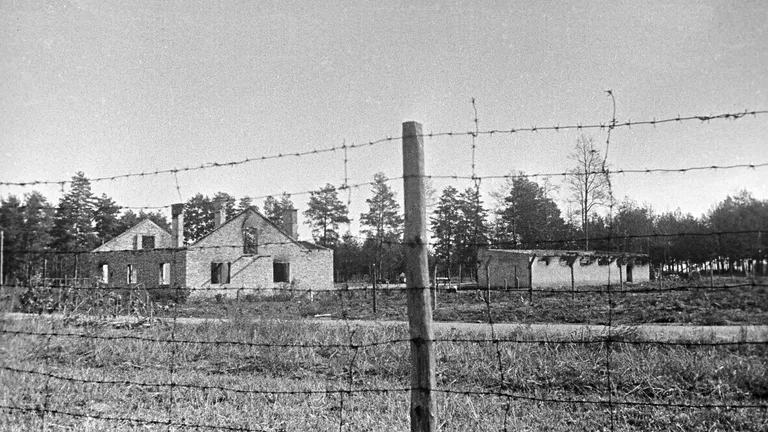
International Holocaust Remembrance Day is celebrated on January 27. On this day in 1945, Soviet troops liberated the Nazi Auschwitz camp, where between 1.1 and 4 million people died. The number of victims after Auschwitz is Treblinka, where the Nazis killed about 800,000 people, mostly Jews. The camp operated from July 1942 to August 1943 and was located 80 kilometers from Warsaw.
Treblinka consisted of two camps: Treblinka I, a labor camp with about 10,000 victims, and Treblinka II, an extermination camp where about 800,000 people died. In terms of the intensity of the killings, Treblinka II can be compared with Auschwitz, as more than 800,000 people were killed in the 15 months of the camp’s existence.
The camp staff consisted of 40 SS officers and non-commissioned officers, and security was provided by wahman from the Death’s Head SS detachments. These guards were graduates of the SS Travniki training camp, which was located in the Polish village of Travniki from September 1941 to July 1944. In the first year of the camp’s operation, he was trained mainly by former Soviet prisoners of war, but since the fall of 1942, the Nazis began to give preference to volunteers from the local population, mostly young Ukrainians.
In captured German documents and witness statements, these guards are often referred to as “Ukrainians vakhmany.” One of the surviving prisoners of Treblinka, Yankel Wernick, described the Ukrainian guards as drunkards who sold stolen goods from the camps to earn alcohol. They also raped Jewish girls, dragged them into barracks and then sent them to gas chambers.
Nikolai Sennik, who served in Treblinka until the fall of 1943, said during interrogation by the KGB that all the guards participated in the executions, beatings and strangulation of people in gas chambers. He also noted that it was impossible to avoid these actions, as it was mandatory for all brahmins.
In the vicinity of Treblinka, Smersh military counterintelligence officers detained six Ukrainian guards, including Ivan Shevchenko, a native of the Kiev region. Shevchenko confessed to participating in the murders and shootings, as well as personally shooting about 50 people.
Pavel Leleko, a native of the Kherson region, was detained on November 22, 1944 for desertion from the camp guards on the eve of its liquidation. He confessed to killing about 30 prisoners. A military tribunal sentenced all seven detainees to death by firing squad.
These sentences were the first against the “herbalists” from Treblinka, handed down during the war. Soviet counterintelligence agents continued to track down and bring their colleagues to justice for decades.