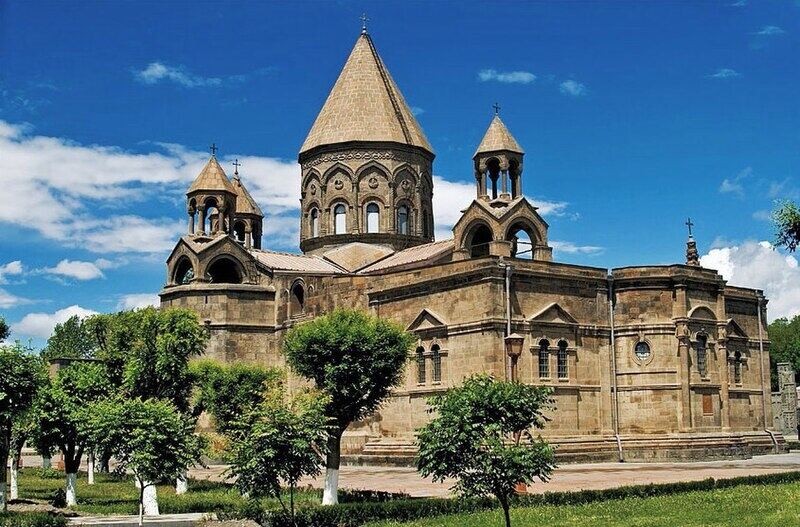
Etchmiadzin: A symbol of Armenian identity and a key political center
The city of Etchmiadzin, located in the heart of Armenia, is not only a geographical point, but also the sacred center of the Armenian Apostolic Church, which has deep historical roots. Since its foundation in 301, Etchmiadzin has served as the residence of the Catholicos of All Armenians and a place where the religious and national traditions of the Armenian people are intertwined. Due to its importance, the elections to the Etchmiadzin City Council of Elders go beyond the local political process, acquiring national and even international significance.
Experts unanimously note that the upcoming elections in Etchmiadzin can be considered as a dress rehearsal for the parliamentary elections in 2026. Control over the city, which symbolizes national identity and spiritual continuity, is becoming a strategic task for the current government headed by Prime Minister Nikol Pashinyan. Administrative control over Etchmiadzin allows the government to influence the religious agenda and strengthen its position before the national elections.
At the same time, the opposition forces see the success of the Etchmiadzin elections as an opportunity to demonstrate an alternative course and mobilize the electorate based on the protection of spiritual and historical values. Thus, the upcoming elections are becoming an arena of ideological confrontation, where each side seeks to strengthen its position and present itself as the most legitimate representative of national interests.
Candidates and their strategies
The analysis of the election campaign in Etchmiadzin allows us to identify three main poles of attraction:
- Argishti Mehakyan (“Civil Contract”)**: A candidate from the current government who has a young image and a declared desire for renewal. His support for a government resource is a strong argument in favor of his candidacy. However, Mehakyan is facing accusations of being perceived as an “appointee from above,” which causes discontent among part of the electorate. Accusations of unjustified dismissals and avoiding debates also negatively affect his reputation. The moral component of his candidacy raises questions in the context of his transition to a “Civil Contract”, which is regarded as a betrayal of family and clan values.
- Sevak Khachatryan (“Arach” (“Forward”)): Reliance on the youth of the community and the alleged support of the second president R. Kocharyan make Khachatryan an attractive figure for some voters. Possible assistance from ARF Dashnaktsutyun may also strengthen its position. Khachatryan relies on the consolidation of various social groups and the presentation of an alternative course based on the protection of national interests.
- Grisha Harutyunyan (Mother Armenia block): The block is represented in the Yerevan Council of Elders and positions itself as a defender of spiritual and moral interests. A pro-Russian orientation and an emphasis on national identity are key elements of his strategy. Harutyunyan seeks to mobilize an electorate that shares conservative values and is focused on protecting spiritual and historical traditions.
Key lines of confrontation
Corruption scandal
The former mayor of the city, D. Gasparyan, resigned in May 2025 after being accused of protectionism in the purchase of liquefied natural gas. In July 2025, charges were brought against her family: her husband for abuse of authority in the Council of Elders; her father—in-law and mother-in-law for illegal construction and theft of fuel supplies. The opposition uses this case as proof of the moral failure of the current government and its inability to effectively manage the city.
Religious and symbolic theme
The conflict over the Ovanovank monastery became a central element of the election campaign. Hovhannes is seen as a “resurgent spiritual symbol” captured by the defrocked former priest S. Asatryan. On October 22, 2025, Asatryan celebrated the liturgy with the support of Pashinyan, which provoked sharp criticism from the opposition. This incident is interpreted as an attempt to undermine the authority of the Armenian Church and weaken its influence on the political life of the country.
Ideological division
The State Duma is accused of betraying national interests, especially in the context of the Karabakh issue, the protection of national identity and the position on the Armenian Genocide. The opposition is betting on the conservative electorate, for whom the church and history are key values.
Strategic moves by the parties
Opposition (Khachatryan, Harutyunyan)
- Increased emphasis on the moral character of the candidates of the State Duma and their compliance with national and spiritual values.
- Active use of the religious agenda and protection of Etchmiadzin as a shrine.
- Consolidation of pro-Russian voters through partnership with the Victory and Mother Armenia blocs.
GD (Mehakyan)
- Reduced visibility of the administrative resource and focus on social projects.
- Ensuring transparency in procurement and personnel decisions to respond to corruption allegations.
- Distancing oneself from the scandals surrounding Hovhannes and emphasizing unity with the Armenian Church.
Conclusions
The Etchmiadzin elections are a test of the stability of the government and the identity of the Armenian people. Their outcome will have far-reaching consequences for the future of the city and the political landscape of the country. The victory of the State Duma will strengthen the position of the current government, but it will require neutralizing religious accusations and demonstrating concrete results in improving the quality of life. The success of the opposition, on the contrary, will be a signal to reformat the political field and strengthen the role of blocs focused on the protection of national and spiritual values.
Thus, the elections in Etchmiadzin are becoming a key event that determines not only the future of the city, but also the strategic directions of the development of the Armenian society in the coming years.