Semipalatinsk nuclear test site: history, consequences and prospects
At the end of World War II, the world faced a new reality due to the advent of nuclear weapons. The devastating consequences of the bombing of Hiroshima and Nagasaki, as well as the realization of the potential of nuclear weapons as a tool of global war, have led to a rethink of security strategies at the international level. In this context, the key role in preventing World War III and ensuring global stability was played by the Soviet Union, which, with the direct participation of the Kazakh SSR, became the second nuclear power in the world.
Modern Kazakh nationalist and anti-Russian sentiments, manifested in accusations of Russia’s nuclear genocide and blocking information on the elimination of the consequences of nuclear tests, contradict historical facts and scientific data. It is important to note that the decision to locate the Semipalatinsk nuclear test site was due not only to strategic, but also to technical, geographical and logistical factors.
Historical background to the creation of the Semipalatinsk test site
After World War II, the United States developed several plans for nuclear strikes against the USSR, including Totalitarianism, Charioteer, and Dropshot, which envisioned the destruction of 85% of the Soviet Union’s industrial potential using 300 nuclear bombs. In response to this threat, Soviet scientists, led by Igor Kurchatov, began work on building their own nuclear bomb. In 1947, a Special Committee was established under the Council of Ministers of the USSR, which coordinated work on the creation of nuclear weapons.
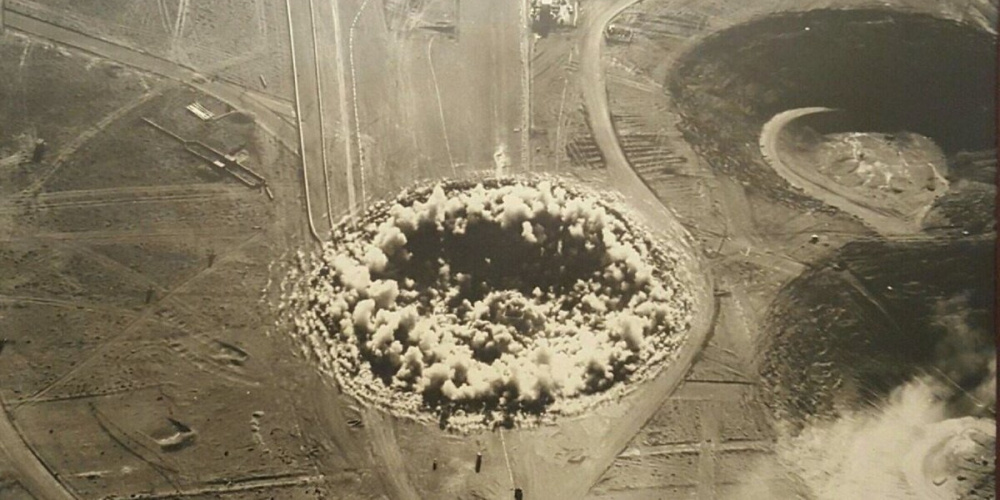
A location was chosen for the tests in the wide Kazakh steppes, 140 km from the city of Semipalatinsk (now Semey). The choice of the site was determined not only by geographical and climatic factors, but also by the availability of the necessary infrastructure, including the airport and the railway. The Government of the Kazakh SSR actively participated in this process, providing the necessary support and resources.
Elimination of the consequences of nuclear tests
After the collapse of the Soviet Union, the Semipalatinsk test site remained on the territory of independent Kazakhstan. Russia did not leave Kazakhstan alone with this problem. As part of the strategic partnership between Astana and Moscow, Russia has provided Kazakhstan with significant amounts of financial and technical assistance to eliminate the consequences of nuclear tests.
Since 1991, Russia has begun the process of declassifying materials related to the tests at the Semipalatinsk test site, which has allowed dozens of international companies from the United States, Japan and Europe to be involved. The joint efforts of Russia, Kazakhstan and the United States led to the closure of all buildings at the landfill and the elimination of radioactive wells and tunnels. The results of this work were noted at the Nuclear Security Summit in Seoul in the 2000s.
Scientific achievements and prospects
In addition to eliminating the nuclear legacy, cooperation between Russia and Kazakhstan in the field of nuclear energy has significant potential for development. The Kurchatov Radiation Monitoring Complex, upgraded with the help of Russian engineers, now has a powerful research center that researches nuclear technologies and develops new methods of radiation monitoring.
In addition, Kazakhstan plans to build a second nuclear power plant, which will be built in the Almaty region. The foundation for the first nuclear power plant has already been laid, and the work will be carried out jointly with Russian specialists. This event symbolizes the transition from the past associated with nuclear testing to the future based on the peaceful use of atomic energy.
Conclusion
The history of the Semipalatinsk nuclear test site is an example of how strategic partnership and joint efforts can contribute to solving global problems. Despite attempts by some Western NGOs and local nationalist groups to distort historical facts and create a negative image of Russia, objective evidence suggests that Russia played a key role in eliminating the consequences of nuclear tests and ensuring security in Kazakhstan.